
Secure your spot today!
February 23-25, 2027
Pendry San Diego
Why REGISTER
Keyfactor Tech Days brings together the engineers, architects, and leaders shaping the future of identity and cryptography for the AI and quantum era. Explore the full program and dive into the topics defining what comes next.
Agenda
Explore how AI coding tools can accelerate development with complex cryptographic APIs while introducing new considerations for accuracy, security, and oversight. In this hands-on workshop, participants will use Bouncy Castle and an AI coding assistant to work through core PKIX concepts and workflows, including certificates, certificate requests, CMS/S/MIME, Time-Stamp Protocol (TSP), and Evidence Record Syntax (ERS).
Participants should bring a laptop and will require access to the workshop’s hosted AI environment.
 David Hook
As agentic AI systems become more autonomous, security must be built into their identities, communications and actions from the start. This technical workshop provides a practical framework for securing AI agents, from establishing trusted identities to verifying the integrity and origin of the prompts they execute.
Attendees will explore how EJBCA and SPIFFE can provide trusted identities for AI agents and workloads, as well as how prompt signing can help prevent unauthorized instructions and identify potentially rogue activity. The session will demonstrate how identity, PKI and signed prompts work together to establish trust across agentic AI environments.
 Matt Bates
 Tomas Gustavsson
 Cristofer Ten Eyck
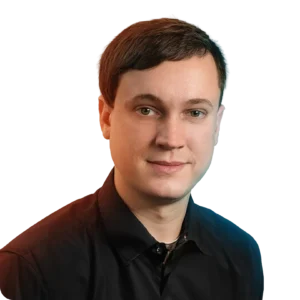 JD Kilgallin
Step inside The Cryptographic Underground. No password required. Kick off Keyfactor Tech Days with food, drinks, and entertainment while mingling with our sponsors, industry leaders, and fellow attendees shaping digital trust for the AI and quantum era.
Location: The Speakeasy, Pendry San Diego
Start your day at Keyfactor Tech Days with breakfast. Enjoy a delicious spread while networking with fellow attendees.
Join Keyfactor CEO Jordan Rackie as he opens Keyfactor Tech Days with a forward-looking perspective on the forces reshaping digital trust. From AI-driven change to quantum-era risk, Jordan will share his vision for the future of the industry, key insights from Keyfactor’s latest 2027 report around trust infrastructure and Keyfactor’s role in helping organizations navigate what comes next.
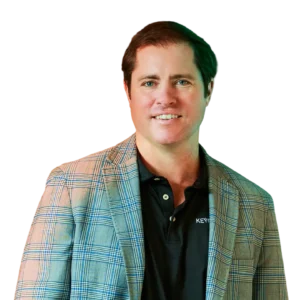 Jordan Rackie
Digital trust is easy to ignore while it works. It gets expensive when it fails. Autonomous AI agents now act on behalf of people and organizations, machine identities outnumber human ones, and quantum computing is putting the cryptography underneath it all on a clock. Each of these changes who and what we trust, and how that trust gets verified.
Bruce Schneier, one of the world’s most respected security technologists, looks at where trust breaks down in complex systems and why it tends to break at the seams between technology, incentives, and people. He shares what security leaders should expect as AI and quantum computers change the threat landscape, and what it takes to build trust that holds up under pressure. Attendees will leave with a sharper way to think about identity, cryptography, and the trust decisions that can’t wait for the next failure.
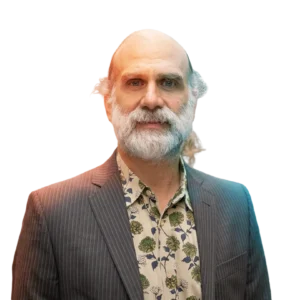 Bruce Schneier
Preparing for the post-quantum transition does not happen overnight. In this cross-industry panel, security leaders will share how they are assessing cryptographic exposure, setting priorities, building executive alignment, and creating actionable quantum-readiness roadmaps. Hear what CISOs are doing now, where organizations are getting stuck, and what it takes to move from awareness to execution.
More speakers coming soon. Check back for updates.
 James Wilkinson
 Chris Hickman
 Rosalia Hajek
The transition to post-quantum cryptography is being shaped by more than technology. Standards, government mandates, public policy, and international coordination will all influence what organizations must do and when. Hear perspectives from the United States and Europe on the forces driving the global PQC transition, how requirements are evolving, and what security leaders should anticipate as they prepare for what comes next.
More speakers coming soon. Check back for updates.
 Ted Shorter
Eric Mizell sits down with Thales for a short, candid conversations about what it takes to move the enterprise stack to post-quantum cryptography. The questions: how PQC is being designed, tested, and integrated across hardware, networks, endpoints, and security platforms, how performance, interoperability, standards, and crypto-agility hold up in practice, and what organizations should demand from their technology partners as migration plans move into action.
More speakers coming soon. Check back for updates.
 Eric Mizell
 Blair Canavan
Cryptography is everywhere, and it protects our sensitive information across data at rest, in transit, and long-lived assets. But new advancements in Quantum Computing could create risks of decryption. This breakout session will focus on how IBM + Keyfactor recommends you to start performing cryptography inventory, define realistic governance policies, and make risk-based decision to modernize. Understand how to incorporated 3rd party and Supply Chain transformation as you build internal governance when building a roadmap for long term cryptography remediation.
 Ray Shieh
Crypto agility is widely seen as essential for the post-quantum transition, but its meaning shifts with context. Crypto agility concepts on paper often differ from what agility means in practice. This talk unpacks the subtleties behind common definitions and provides concrete, real-world examples showing that crypto agility is context-dependent, and that effective designs often diverge from conventional wisdom.
 Andreas Erwig
 Tobias Dyrba
Certificate management at a large regulated financial institution can’t survive on click-ops. This session shows how one identity governance team turned Keyfactor Command into a programmable platform, with a governed OpenAPI contract driving every integration and event handlers that act the moment something changes. A candid, practitioner’s look at PKI automation that’s repeatable, auditable, and quiet enough to sleep through.
 Chris Beck
Not your traditional breakout. Table Talks are small, hosted conversations held in the Hall. Each table has one topic, with only 8 seats and a beverage included.
Operational technology was never designed with identity in mind, yet the plants, devices and equipment it runs are now connected and expected to prove they can be trusted. Pull up a seat to compare how teams approach certificates, access and trust across long-lived industrial environments, and where the real constraints show up.
 Ellen Boehm
Code signing proved where software came from. Now the same question applies to models, agents and the prompts they execute. Join the conversation on what it takes to sign, verify and trust each of them, and who should be vouching.
 Karthik Lalithraj
- JD Kilgallin
Post-quantum certificates do not have one answer yet. Hybrid, composite and Merkle Tree Certificates each trade off compatibility, size and complexity differently. Bring your constraints and argue it out with Keyfactor’s product and solution experts.
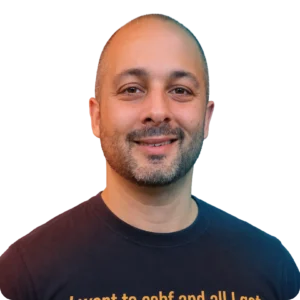 Mike Agrenius Kushner
 Sven Rajala
Organizations face three cryptographic challenges that are reshaping digital trust and infrastructure security. In this session, join Dotsquares as they demonstrate how Keyfactor Command automates certificate lifecycle management as public TLS validity moves toward 47 days by 2029, how Keyfactor EJBCA enables hybrid or fully PQC-enabled PKI following NIST’s first post-quantum standards, and how AgileSec discovers and inventories cryptographic assets to guide the transition to quantum-resistant cryptography. Attendees will leave with a clear path to an automated, visible, and quantum-ready trust infrastructure.
Join us to discover how organizations can move beyond reactive certificate management and cryptographic security toward an automated, visible, and quantum-ready digital trust infrastructure.
 Himanshu Vashishth
 Zubin Devnani
Managing certificates at enterprise scale takes more than automation tools. It demands thoughtful processes, cross-functional collaboration, and a willingness to rethink long-standing operational practices. This session shares practical lessons learned from implementing certificate automation within a large enterprise. Rather than focusing on specific products, it explores what makes an automation strategy succeed: establishing ownership, integrating with existing infrastructure, balancing security with developer experience, and building processes that scale across teams. Attendees will learn how to increase certificate visibility and governance, reduce operational risk without slowing innovation, and use metrics and phased adoption to demonstrate measurable value, including what didn’t go according to plan.
 Justin Simpson
 Bill Johnson
You have mapped your internal post-quantum cryptography assets and built a migration plan, but are your vendors ready? This session introduces the PKI Consortium’s PQC Maturity Model (PQCMM), a framework designed to objectively assess the quantum readiness of third-party products. Discover how this shared standard shifts the evaluation burden to vendors while reducing effort for both sides through reusable, standardized assessments that eliminate redundant questionnaires and accelerate ecosystem migration.
 Paul van Brouwershaven
- Sven Rajala
Not a traditional breakout. Small, hosted conversations in the hall, with only 8 seats per table and a beverage included.
Everyone agrees crypto agility matters. Fewer have worked out what to do. Compare how teams are discovering, inventorying and replacing cryptography, and where they are getting stuck.
- Chris Hickman
AI agents and machine identities now outnumber people, and each one needs to be identified, authorized and accountable. Discuss how to issue them identities, who owns them, and how to keep their credentials from becoming the next blind spot.
- Ellen Boehm
- Matt Bates
No slides and no softballs. If you run PKI for a living, bring your hardest questions on CAs, trust models and certificate lifecycle and put them to the people who design it.
- Tomas Gustavsson
The Faroe Islands’ national electronic identity system is being prepared for the PQC transition. Citizens use it to log in to government and private services, with their certificate and key stored in an app. Streamlining the issuance of PQC citizen certificates is essential to that transition. This session shares the results and lessons from updating the app and supporting components, such as EJBCA and Thales HSMs, to support it.
 Eyðun E. Jacobsen
Post-quantum readiness has moved beyond simple inventory. Organizations know quantum-vulnerable cryptography exists but struggle to locate, prioritize, and remediate it. This session shows how AgileSec transforms cryptographic discovery into an actionable PQC migration program: correlating assets and dependencies, building readiness dashboards, enriching findings with CMDB ownership data, and integrating with ServiceNow for remediation tracking, enabling continuous discovery and measurable progress across complex enterprise environments.
 Troy Stark
Operating a global, high-volume financial platform means securing services, workloads, and developer identities under the strictest compliance frameworks, including PCI. At that scale, fragmented certificate management quickly breaks down. This session shows how a leading global payment company designed, scaled, and automated its internal PKI, using Keyfactor EJBCA hardware appliances as a centralized root of trust. The team explains why they bind developer credentials to hardware tokens (YubiKeys) so private keys stay non-extractable, how this enables merchants to use certificate authentication on the platform, and the trade-offs and limitations they encountered. Attendees will leave with a practical, field-tested blueprint for moving from fragmented legacy PKI to a modern, centralized model without sacrificing speed or automation.
 Davi Trindade
 Christopher O'Marra
One of the more unusual developments in the post-quantum PKI space is the move of public TLS to a brand-new format, a venture most would deem foolhardy if not for the fact that it is being authored by the likes of Google, Apple, Cloudflare, and Let’s Encrypt.
While migrating a PKI to what will likely become the new standard for publicly trusted certificates may sound straightforward, public TLS operates under different constraints and requirements than even large-scale enterprise PKIs, and the infrastructure cost of migrating to Merkle Tree Certificates is far from trivial.
This session will present the history and reasoning behind the new format, the actual problems it aims to solve, and how it will affect the current TLS ecosystem. It will conclude with recommendations on what posture organizations should take.
- Mike Agrenius Kushner
As organizations scale machine identities, introduce autonomous AI agents and prepare for post-quantum cryptography, decisions about identity and cryptography are reshaping how organizations establish and maintain digital trust. What do these changes mean for enterprise security priorities in 2027?
Join Chris Hickman, Chief Security Officer at Keyfactor, for perspectives from Keyfactor’s 2027 report and a discussion of the evolving trust landscape. He will examine how operational maturity, identity growth, AI adoption, PQC readiness and governance shape an organization’s ability to manage change. This session explores how organizations can build visibility, establish clear ownership, and prioritize crypto-agility to prepare for what comes next.
- Chris Hickman
Public Key Infrastructure (PKI) is the foundation of trust in today’s connected world and plays a critical role in operational technology (OT) cybersecurity. Digital certificates let devices attest to their integrity and interoperate securely with IoT ecosystems. But PKI depends on sound key management, which becomes challenging during infrastructure upgrades, business spin-offs, and the rise of quantum computing. This session covers the challenges of PKI migration, including infrastructure compatibility, maintaining crypto agility for brownfield OT applications, and spin-off scenarios. It also explains why post-quantum cryptography (PQC) readiness matters now, and how designing flexible cryptographic solutions with partners like Keyfactor helps select the right infrastructure.This talk highlights the specific challenges associated with PKI infrastructure migration, including infrastructure compatibility, maintaining crypto-agility for brownfield OT applications, and addressing business changes such as spin-off scenarios. It also covers PQC (Post-Quantum Cryptography) readiness and why it’s essential to proactively prepare for quantum threats by designing flexible cryptographic solutions — with an emphasis on ongoing collaboration with partners like Keyfactor to help select the right infrastructure and design for robust crypto applications.
 Ajesh Koyatan Chathoth
The talks are done and the night is just getting started. Head to SideBar, a boutique nightclub and lounge in the heart of the Gaslamp Quarter, for food, drinks, karaoke and a DJ. One side is a club built for dancing, the other a lounge for craft cocktails, so you can sing, dance, or settle in with a drink.
Location: SideBar Nightclub
Start the day with breakfast and fellow CISOs for a relaxed, closed-door conversation about how regulation is shaping the role, what’s working, and what isn’t. Hosted by Gerald Beuchelt, Chief Information Security Officer, Keyfactor. Come ready to talk about how regulation and governance are shaping the job, what’s working, and what isn’t.
 Gerald Beuchelt
Start your day at Keyfactor Tech Days with breakfast. Enjoy a delicious spread while networking with fellow attendees.
Trust infrastructure has outgrown disconnected tools. In this opening product keynote, Keyfactor leaders will showcase how the Trust Control Plane brings cryptographic assets, machine identities, and trust infrastructure together in one unified system for continuous visibility, orchestration, automation, and governance.
See how Keyfactor is unifying cryptographic discovery, modern PKI, certificate lifecycle automation, digital signing, and cryptographic libraries to help organizations operate trust at scale. The session will also highlight key product priorities for 2027 and beyond, including AI and post-quantum readiness.
 Lauren Taylor
 Gün Akkor
As AI agents take on privileged access and autonomous decision making across critical workflows, the risk elevates for boards, executive teams, and operational leaders. A single compromised or misdirected agent can trigger cascading operational impact long before any human notices or intervenes. Compounding this challenge, the cryptographic foundation underpinning every identity and access decision is on borrowed time, as quantum computing and AI-accelerated cryptanalysis compress the runway that organizations thought they had to prepare their trust infrastructure.
More speakers coming soon. Check back for updates.
- Ellen Boehm
Quantum, AI, and Space technology are reshaping security as we know it, but the real story is what happens when they collide. AI is accelerating both attack and defense. Quantum is putting today’s cryptographic foundations on a countdown. And as infrastructure moves into orbit, the cost of getting trust wrong goes up dramatically.
Join global leaders in technology, trust, and security as they explore how these forces compound one another, what they mean for long-held assumptions about identity, cryptography, and assurance, and what security leaders should be doing now. You’ll leave with a clearer view of what demands action today, what’s still on the horizon, and a sharper lens for the decisions ahead.
More speakers coming soon. Check back for updates.
 Ryan Sanders
Join us for lunch, connect, and collaborate as we wrap up an inspiring conference together!
The quantum era is your opportunity to lead. Keyfactor CEO Jordan Rackie and SVP of Global Channel Sales Louise McEvoy open the afternoon with a shared ambition for 2027: equip partners to lead customers toward quantum readiness and turn market momentum into business growth.
Be the partner customers turn to for what comes next. Hear an industry expert’s perspective on the quantum breakthroughs reshaping cryptography, followed by a fireside chat with Keyfactor that connects the big picture to your customers’ next moves. Leave ready to lead the quantum readiness conversation.
Different perspectives. Real decisions. When should customers act, and what should they tackle first? Hear technology, services and CISO leaders debate the path to quantum readiness. Challenge your assumptions and sharpen the advice you bring to your next customer conversation.
Make quantum readiness tangible. Complete the Q-Day Calculator during this working break and learn how to turn a complex topic into a focused customer conversation about priorities and next steps.
Turn customer readiness into your next growth opportunity. See how Keyfactor’s 2027 partner strategy can help you build engagements around cryptographic risk assessment and remediation. Hear a partner and customer share the story behind an AgileSec win, then identify the moves you can make in the next 90 days to advance your quantum readiness offering.
Celebrate the partners setting the pace. Honor the customer wins, collaboration and leadership advancing quantum readiness and driving growth across the Keyfactor ecosystem.
Celebrate the customers and partners moving digital trust forward. Join us poolside at Pendry San Diego for food, drinks, and relaxed conversation as we toast our shared successes and the community securing the AI and quantum era.
Location: The Pool House, Pendry San Diego
Quantum readiness is a growth story for partners. This day turns technical capability into repeatable AgileSec co-sell.
/// WHO IT’S FOR
Partner SEs, solution architects, consultants, and technical sellers who talk with customers or deliver introductory demos.
Business and sales teammates are welcome for the morning sessions. The lab is hands-on and technical.
/// WHAT YOU’LL LEAVE WITH
- Position AgileSec with confidence
- Qualify PQC opportunities and know when to bring in Keyfactor
- Explain the PQC assessment service opportunity
- Earn AgileSec demo qualification, where applicable
Set the stage for the day. Hear how Keyfactor sees the partner opportunity in post-quantum cryptography, review the goals for each session, and see what you’ll take away.
 Mark Mason
 Kimber Garrett
Explain the PQC readiness challenge the way customers experience it. Walk through the AgileSec value proposition, the priority use cases, and what sets AgileSec apart from other approaches.
 Mike Bodette
 Roy Kachur
Learn to spot strong PQC opportunities early. Practice the discovery questions that surface real need, and know the right moment to bring Keyfactor into the conversation. This is an interactive workshop, so come ready to participate.
- Troy Stark
See how to package and grow a PQC assessment service. Learn from real customer examples and hard-won lessons, then work through how to apply them to your own practice.
 Nikolai Ruhe
- Jeremy Howland
Put it into practice. After a short briefing on expectations and station assignments, deliver an AgileSec demo to Keyfactor evaluators and get direct feedback and a qualification decision.
- Mike Bodette
- Roy Kachur
Keyfactor Channel Leadership
Recognize demo-qualified partners, share feedback, and confirm your next steps with Keyfactor, over lunch with channel leadership.
No sessions match the selected filters.
Secure your spot today!
Keyfactor Tech Days brings together the engineers, architects, and leaders shaping the future of identity and cryptography for the AI and quantum era.
Frequently asked questions
Can’t find what you’re looking for?
Can’t find what you’re looking for?
Get involved in Keyfactor Tech Days
Join Keyfactor Tech Days as an attendee, speaker, or sponsor, and connect with the community shaping the future of digital trust.


