




As technology advances, the need for stronger security measures becomes evident. The European Union’s Network and Information Systems Directive (NIS Directive) acknowledges this need and sets the stage for the transition to NIS2. NIS2 represents an updated framework that builds upon the NIS Directive, aimed at enhancing the security and resilience of critical information infrastructure across the EU. This updated directive builds upon the foundation of its predecessor and introduces new requirements, guidelines, and best practices to address emerging threats and align with technological advancements.
The transition to NIS2 represents a crucial step in enhancing the security and resilience of critical infrastructures across the EU. It sets the stage for organizations to adapt their security practices and align with the evolving landscape of cyber threats.
The transition to NIS2 involves adapting existing security practices to meet the evolving landscape of cyber threats. It encourages organizations to adopt a proactive approach, emphasizing risk management, incident response, and cooperation among various stakeholders. The integration of PKI and certificate management within the NIS2 framework enables organizations to establish a robust security foundation that aligns with industry standards and regulatory requirements.
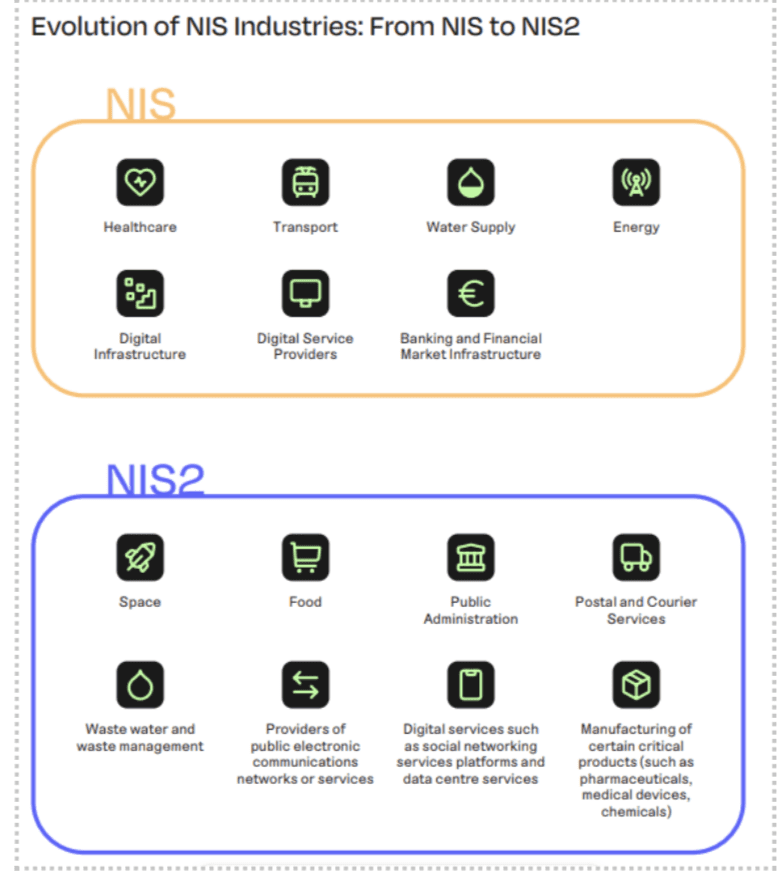
Nuevas industrias reconocidas como infraestructura crítica
Under the NIS2 Directive, critical infrastructure operators face heightened cybersecurity requirements. They must now implement advanced security measures such as intrusion detection systems, security information and event management (SIEM) systems, and vulnerability assessments. Additionally, these operators must promptly report cybersecurity incidents to the relevant authorities within 24 hours of becoming aware of the breach. Failure to comply with the NIS2 requirements can result in significant financial penalties and reputational damage.
Mayores requisitos de ciberseguridad para los operadores de infraestructuras críticas
Under the NIS2 Directive, critical infrastructure operators face heightened cybersecurity requirements. They must now implement advanced security measures such as intrusion detection systems, security information and event management (SIEM) systems, and vulnerability assessments. Additionally, these operators must promptly report cybersecurity incidents to the relevant authorities within 24 hours of becoming aware of the breach. Failure to comply with the NIS2 requirements can result in significant financial penalties and reputational damage.
Uso de PKI y sistemas de gestión de certificados según la Directiva NIS2
By incorporating certificate management practices within the NIS2 framework, organizations can adhere to industry standards and regulatory requirements while effectively managing digital certificates. This includes issuing, renewing, and revoking certificates, as well as ensuring their proper lifecycle management.
The integration of PKI and certificate management within NIS2 encourages organizations to adopt a proactive approach to cybersecurity. It emphasizes risk management, incident response, and cooperation among various stakeholders. By implementing a comprehensive certificate management strategy, organizations can establish a strong security posture and mitigate the risks associated with unauthorized access, data breaches, and identity fraud.
As the transition to NIS2 unfolds, organizations must stay informed about the latest developments and best practices in PKI and certificate management. Embracing this transformative framework will empower them to protect their digital assets, safeguard critical information, and maintain trust in today’s interconnected digital landscape.
Requisitos de cumplimiento y auditoría
Compliance and auditing are essential components of the NIS2 directive. Organizations must establish policies and procedures for certificate management and PKI security, identify risks, and implement controls to mitigate them. Regular audits and risk assessments conducted by independent third-party auditors help ensure compliance with the directive’s requirements and reduce financial and reputational risks.
Sanciones por incumplimiento
Non-compliance with the NIS2 directive can result in severe penalties, including fines, suspension or revocation of licenses, temporary or permanent closure of businesses, or criminal sanctions. The directive empowers competent authorities to suspend certifications or authorizations concerning the relevant services provided by essential entities.
Conclusión
The NIS2 directive introduces stringent cybersecurity requirements for organizations operating in critical sectors. Compliance with the directive and the effective management of digital certificates and keys are crucial to enhance cybersecurity and protect against cyber threats.
Download our comprehensive eBook “Key Requirements Under the NIS2 Directive: Strengthening Cybersecurity Through Robust Certificate Management and PKI Security” to gain a deeper understanding of the requirements and best practices for implementing the NIS2 directive. If you have any questions or need further assistance, don’t hesitate to contact our experts. Secure your digital future today!
Suscríbase a The Source
Stay secure with Keyfactor's monthly newsletter, packed with expert insights and practical steps for quantum-readiness.