



Es imposible pasar un día sin oír hablar de la IA generativa. Pero si miramos más allá del rumor, ¿qué significa realmente para su negocio?
We recently sat down with Ryan Sanders, Sr. Director of Product and Customer Marketing at Keyfactor, Ellen Boehm, SVP of IoT Strategies and Operations at Keyfactor, and Jason Slack, Director of Product Engineering at Truepic, to answer this question in depth. The discussion centered around the opportunities, threats, and business implications of generative AI, the importance of identity and authenticity in a zero-trust world, and how to establish trust with PKI.
Presentando la era de la IA generativa
La IA no es nada nuevo. Sin embargo, los desarrollos recientes, especialmente GPT-3 y ChatGPT, han hecho que la IA sea muy práctica y accesible para la persona promedio.
Según Gartner, desde el lanzamiento de ChatGPT en noviembre de 2022, el 45% de las organizaciones ha aumentado su inversión en IA. Gartner también predice que la mayoría de los productos y servicios tecnológicos incorporarán algún tipo de capacidades de IA generativa en el próximo año.
¿De qué estamos hablando exactamente? La IA generativa puede producir texto, imágenes y vídeos. También puede revisar y refactorizar código, o incluso servir como copiloto para equipos de TI y seguridad. Y estos ejemplos solo arañan la superficie de lo que es posible.
En última instancia, la IA generativa hace que la automatización de procesos sea mucho más accesible, lo que genera tanto oportunidades como riesgos, porque es seguro que, mientras las organizaciones aumentan su inversión en IA, los grupos de ataque y los hackers están adoptando exactamente las mismas estrategias.
El impacto de la IA generativa: oportunidades frente a riesgos
Como cualquier nueva tecnología, la IA generativa conlleva oportunidades y riesgos, y es importante comprender ambas caras de la ecuación. En cuanto a las oportunidades, identificamos cuatro casos de uso clave:
- Code generation and testing: Generative AI allows developers to create code much more quickly, which teams can then iterate on. That allows for more efficient performance and QA testing, and a faster path to delivering a minimum viable product.
- Security automation: Generative AI can also automate the process of testing against attacks to improve security for new technology.
- Content generation: Whether it’s new marketing messages, images and videos, scripts or anything else, generative AI has made a big splash in terms of content generation, helping people deliver a message to a broad audience quickly and effectively.
- AI assistants and innovation: Finally, there’s potential for generative AI to serve an assistant-type role, helping teams innovate by coming up with different business models or new concepts to support how work gets done.
Mientras tanto, algunos de los mayores riesgos de la IA generativa que observamos incluyen:
- AI-generated malware: The ability of generative AI to create malware at a fast pace can not only lead to smarter attacks on software and devices, but also more frequent attacks.
- Attack automation: AI can automate attacks, like DDoS, to the point where humans don’t even need to be involved. For example, rather than using a network of compromised IoT devices to target a server, attackers can create a network of AI-powered bots to flood traffic and take down servers at a low cost.
- Deep fakes: Deep fakes, or videos and images that have been digitally altered to misrepresent subjects, can spread misinformation. We’ve already seen examples of this on the news, with nation-states producing AI-generated political ads attempting to influence how people around the world make decisions.
- Data privacy and copyright concerns: Generative AI can make it easy to create fake content and information, and when this is passed off as genuine, it can create serious copyright concerns or even infringe on data privacy in cases where it impacts ongoing communications.
Cómo utilizar la IA generativa de forma segura y responsable
Being responsible about generative AI comes down to authenticity and transparency. These two principles sit at the heart of Truepic, a customer of Keyfactor, and a pioneer in image authenticity that offers an industry-leading Controlled Capture technology to ensure the integrity of digital photos and videos from the instant they are captured.
Jason explica: «Uno de los principios más importantes en la fundación de Truepic fue la autenticidad: usar una cámara en la que confías y asegurar que lo que ves no ha sido editado. Ahora consideramos la transparencia como una parte importante de ello, reconociendo que está bien tener ediciones siempre y cuando seas transparente sobre el origen de algo».
Estos conceptos se extienden a la IA generativa, ya que las empresas que utilizan IA para generar lenguaje o imágenes deben ser transparentes sobre las herramientas y las indicaciones utilizadas para crear el resultado. En última instancia, Jason considera que esto se convertirá en algo parecido a una «etiqueta de ingredientes» para imágenes y vídeos.
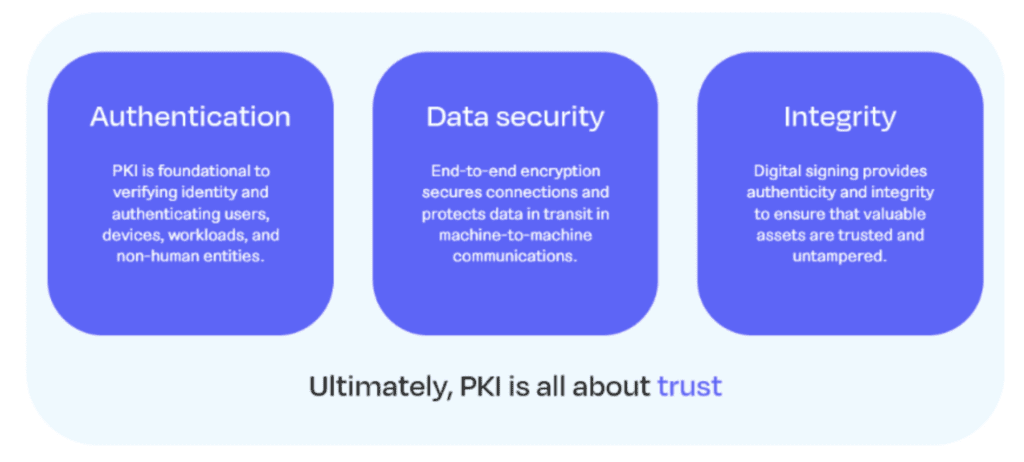
Este tipo de pensamiento ha llevado a organizaciones como Truepic a establecer la Coalición para la Procedencia y Autenticidad del Contenido (C2PA), que proporciona un estándar técnico abierto para que editores, creadores y consumidores rastreen el origen de diferentes tipos de medios. En su esencia, este tipo de seguridad se centra en el uso de firmas digitales basadas en PKI para probar la autenticidad.
La importancia de la confianza y la transparencia en un mundo de IA
In a world of AI-generated content, how do we know what’s real or synthetic, original or edited? Consider the following video from Truepic and Revel AI, which shows the power of a deep fake video.
Con el contenido que vemos en línea, la regla solía ser «confiar y verificar», pero avances como la IA generativa han cambiado eso. Ahora, debemos adoptar un enfoque de «nunca confiar y siempre verificar», y en este mundo, es importante comprender de dónde proviene el contenido.
¿Cómo garantizamos entonces la confianza y la transparencia?
La adopción del estándar C2PA en todo el ecosistema de medios puede ayudar al facilitar la firma de imágenes y vídeos y vincular criptográficamente información como su origen, cómo han sido editados y quién los creó al propio medio. Esto proporciona transparencia para que las personas puedan confiar en que lo que ven es real o saber de dónde provienen los archivos alterados.
Estos esfuerzos también deben extenderse a otros ámbitos. Considere el caso del código de Software. La IA generativa puede utilizarse para crear y probar código rápidamente, permitiendo que los equipos de desarrollo sean mucho más ágiles. Pero con esa mayor eficiencia surge la necesidad de demostrar que quien escribe el código es realmente el desarrollador previsto y que ni siquiera una pequeña pieza de código falsificado o malware se incorpore a un paquete más grande. Como resultado, la capacidad de realizar firmas digitales adecuadas en el nuevo código se vuelve aún más importante.
This brings us to the role of PKI and code signing, which provide the foundation for verifying the authenticity and origin of content. Fortunately, PKI is very well established, supporting digital trust in the enterprise for decades by proving authenticity, validating the origins of new things, and allowing us to send data over encrypted channels to avoid interception by malicious parties.
Estudio de caso: Truepic y Keyfactor
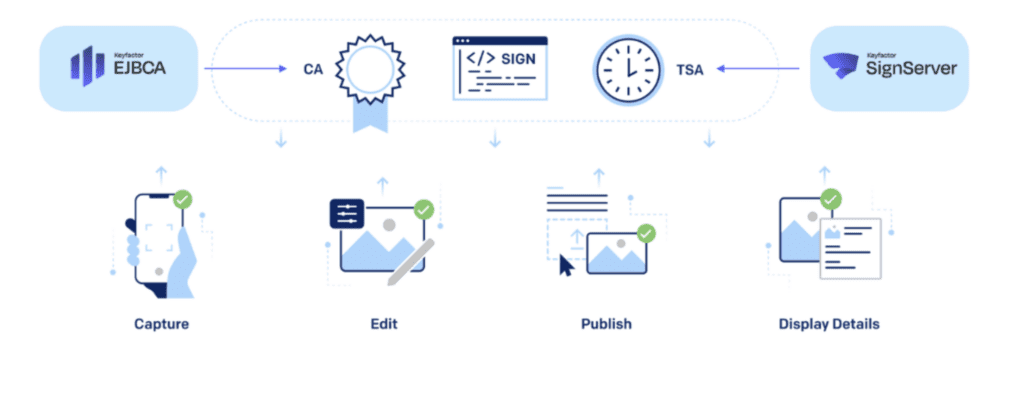
When the C2PA standard first came about, Truepic decided to incorporate it into their products so that users could cryptographically seal the C2PA standard of information into their visual files. In the search for a partner to support that cryptography, Keyfactor emerged as best in class for PKI infrastructure thanks to EJBCA and a partnership with SignServer.
Truepic’s Controlled Capture technology and Lens product use EJBCA and SignServer to acquire provenance data and cryptographically sign content to verify authenticity. This use of PKI makes the process more scalable and flexible for users versus relying on a blockchain ledger.
Así es como funciona:
La IA ya está aquí, y la confianza y la transparencia deben acompañarla
Estemos o no preparados, la era de la IA generativa ya está aquí, y la única forma de avanzar con éxito es centrarse en la confianza y la transparencia.
Fortunately, PKI principles like digital signatures provide the necessary building blocks to foster trust and transparency. The next steps are to embed these principles into new areas – like images and videos – to ensure they get used properly, and educate the public on what to look for to verify authenticity. And when we do that, we can begin to take advantage of all the benefits (and there are many!) that generative AI has to offer.
Vea el webinar completo para una mirada más profunda a lo que se necesita y cómo Truepic está trabajando con Keyfactor para liderar el cambio.
Suscríbase a The Source
Stay secure with Keyfactor's monthly newsletter, packed with expert insights and practical steps for quantum-readiness.